
- Coverage
- Canadian market & registry
- Reviewed
- 11 October 2026
- Price
- Scope-specific written quote
- Reliability
- Evidence, not invented scores
95%, 96%, 97%, 98% or 99% AFUE?
Use seasonal efficiency to compare fuel use, then price the actual improvement.
What the percentage measures
AFUE is a seasonal fuel-efficiency rating. It is useful for comparing combustion furnaces on the same basis, but it does not include all household heating costs. Blower electricity, distribution losses, controls, weather and indoor temperature choices also affect the bill. A high AFUE does not establish comfort in the coldest room.
Compare the exact size and configuration, not just the family maximum in a headline. Some current manufacturer headings and technical documents disagree. This guide preserves those conflicts rather than silently choosing the most attractive number. The current certified model record and matching technical sheet should resolve the purchase.
A small percentage difference is a small fuel difference
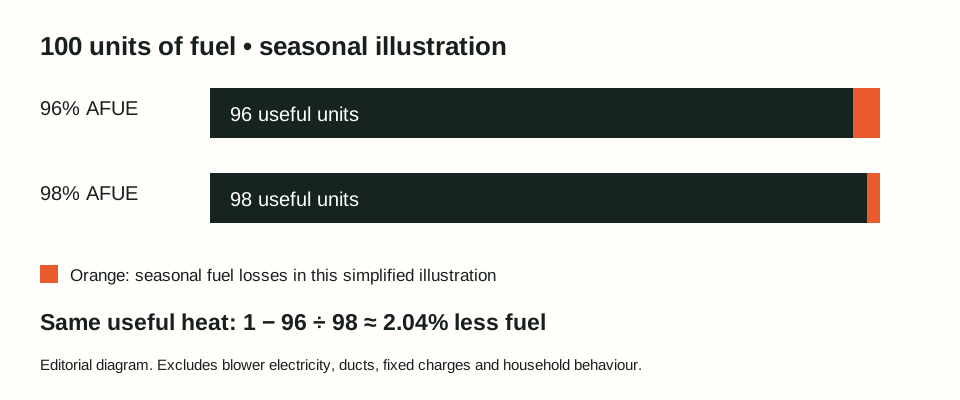
For the same useful heat, theoretical fuel use is inversely proportional to efficiency. Moving from 96% to 98% AFUE reduces that portion of fuel use by about 2.04%, not by 20%. A 95% to 97% change is about 2.06%. These calculations describe equal heat demand; they are not forecasts of an individual utility bill.
If annual space-heating fuel spending were CAD 1,500 at 96% efficiency, an otherwise identical 98% alternative would imply roughly CAD 31 in annual fuel savings. Fixed utility charges, water heating and electricity must be excluded from that simplified calculation. A large upgrade premium may be justified by comfort features, but those should be described separately from fuel savings.
Certification and purchase eligibility are separate
ENERGY STAR furnace criteria changed on July 31, 2026. An older brochure badge is not enough to determine certification for a newly manufactured unit, and certification does not establish eligibility for a Toronto rebate. Check the exact product and the current program rules before signing.
Electric resistance furnaces and heat pumps should not be ranked using gas AFUE alone. Electric resistance converts electricity to heat at the point of use; a heat pump moves heat and has temperature-dependent performance. Compare fuel prices, annual demand and the complete system rather than treating the percentages as interchangeable.
Illustrative efficiency comparison
Sources & verification
Research snapshot: 11 October 2026. Confirm the current complete model, Canadian supply and warranty before purchase.